Commercial
Sustainable Water for Commercial Buildings

How We Can Help
Commercial buildings account for significant water consumption, but most facility managers lack visibility into where water is actually going. We help you understand your water footprint, identify quick-win savings opportunities, and implement solutions that pay for themselves. Whether you're pursuing green building certification or meeting ESG commitments, we make water efficiency straightforward and measurable. A building produces a great deal of half-hourly meter data and very few questions that need a differential equation, which makes it the one setting where the machine learning is the main event rather than the support act. A model of each sub-meter's normal weekday, weekend and holiday pattern turns a leak into an obvious departure from expectation instead of a number somebody has to happen to notice. Cooling tower chemistry, cycles of concentration and pipe hydraulics remain arithmetic and physics, and we do not dress them up as anything else.
How the work runs
How a commercial engagement runs, from the decision that starts it to the one it hands back.
Pin down the driver
A water cost line, a green building credit and an ESG disclosure need different evidence. Only the disclosure requires an unbroken year of data, and that changes what we install.
Walk the building
Fixtures, cooling towers, irrigation, kitchens and specialty uses are inventoried on site, because the incoming meter records a total and the losses hide in the breakdown.
Sub-meter the systems
Sub-meters go on cooling, irrigation, domestic and tenant circuits so half-hourly consumption becomes attributable to a system or a floor rather than to the whole building.
Learn each meter's pattern
A model trained on each sub-meter's own history learns its normal weekday, weekend and holiday shape, so a steady overnight flow reads as an anomaly without crossing any absolute limit.
Work the tower chemistry
Cycles of concentration, blowdown and drift losses are calculated, not learned, because cooling tower makeup follows water chemistry and hydraulics rather than anything visible in meter history.
Approve the measures
The facility team signs off fixture, tower and leak repair work with payback stated, and the same sub-meters then verify whether consumption actually moved.
Key Challenges
High water costs in large facilities
HVAC and cooling water inefficiencies
ESG reporting requirements
Lack of visibility into water consumption
Our Solutions
Building water audit and benchmarking
Cooling tower and HVAC water optimization
ESG water metrics tracking and reporting
Smart sub-metering and leak detection
Learned consumption baselines per sub-meter for night-flow leak detection
Frequently Asked Questions
A water audit examines all water uses in a building - restrooms, HVAC, irrigation, kitchens, and specialty uses. We measure consumption, identify leaks and inefficiencies, benchmark against similar buildings, and recommend improvements with payback calculations. Audits typically identify 15-30% savings potential.
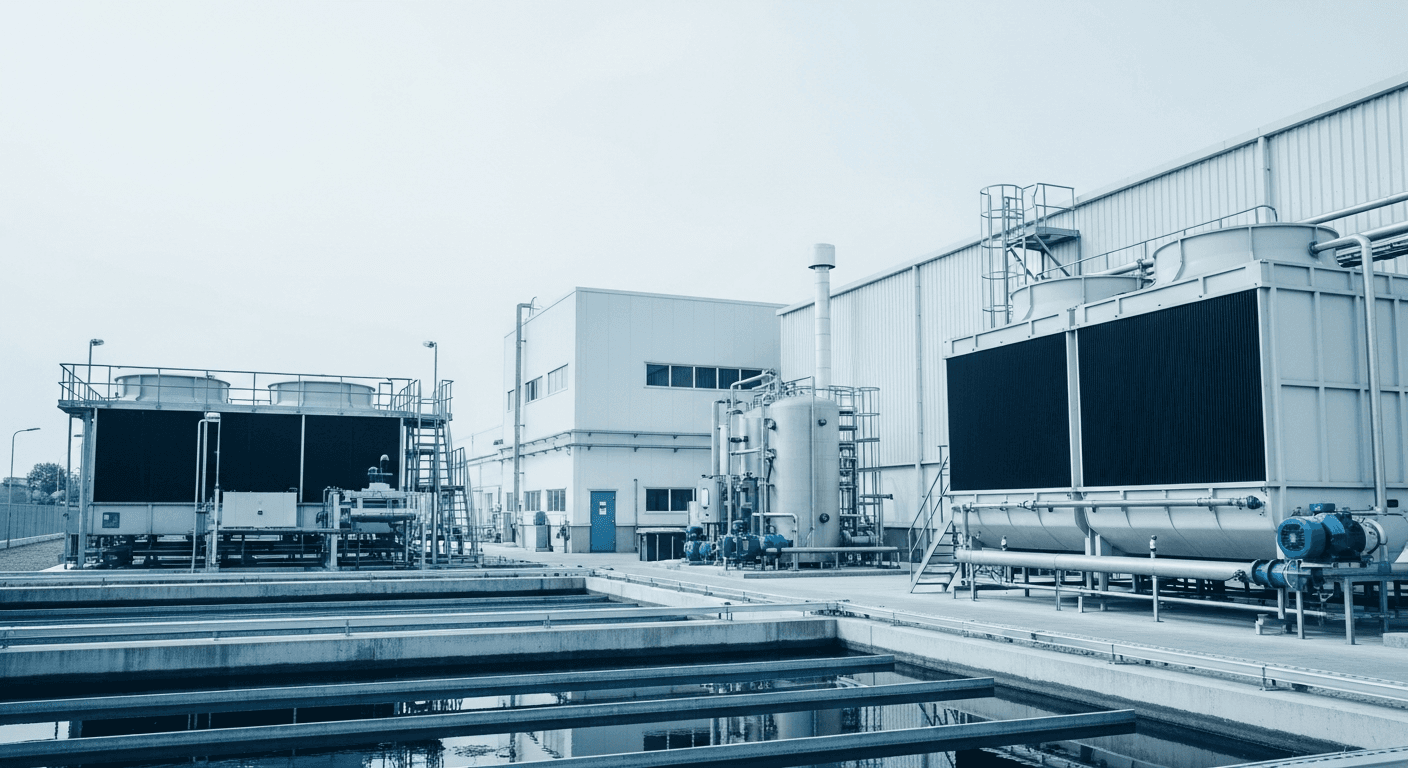
Cooling towers lose water through evaporation, drift, and blowdown (discharge to maintain water quality). We optimize cycles of concentration, reduce drift with proper equipment, and implement chemical treatment programs that minimize blowdown while preventing scale and corrosion. Savings of 20-40% are typical.
ESG (Environmental, Social, Governance) reporting discloses water consumption, efficiency measures, and water-related risks to investors and stakeholders. Frameworks like CDP Water and GRI require standardized metrics. We help companies track water data accurately and report in formats that meet investor expectations.
LEED, IGBC, and GRIHA have water efficiency credits for fixture efficiency, rainwater harvesting, wastewater treatment, and metering. We assess current performance, identify cost-effective improvements, and document compliance. Water credits are often among the most achievable for certification.
Low-flow toilets, urinals, faucets, and showerheads use advanced designs to maintain performance with less water. Modern low-flow toilets use 4-6 liters versus 13+ liters for old models. Sensor faucets reduce waste from running taps. Fixture upgrades often pay back in 1-3 years through water savings.
Sub-meters track water use by tenant, floor, or system (cooling, irrigation, domestic). This visibility enables accurate billing, identifies high-use areas, and detects leaks quickly. Behavior change from awareness alone typically reduces consumption 5-10% before any physical improvements.
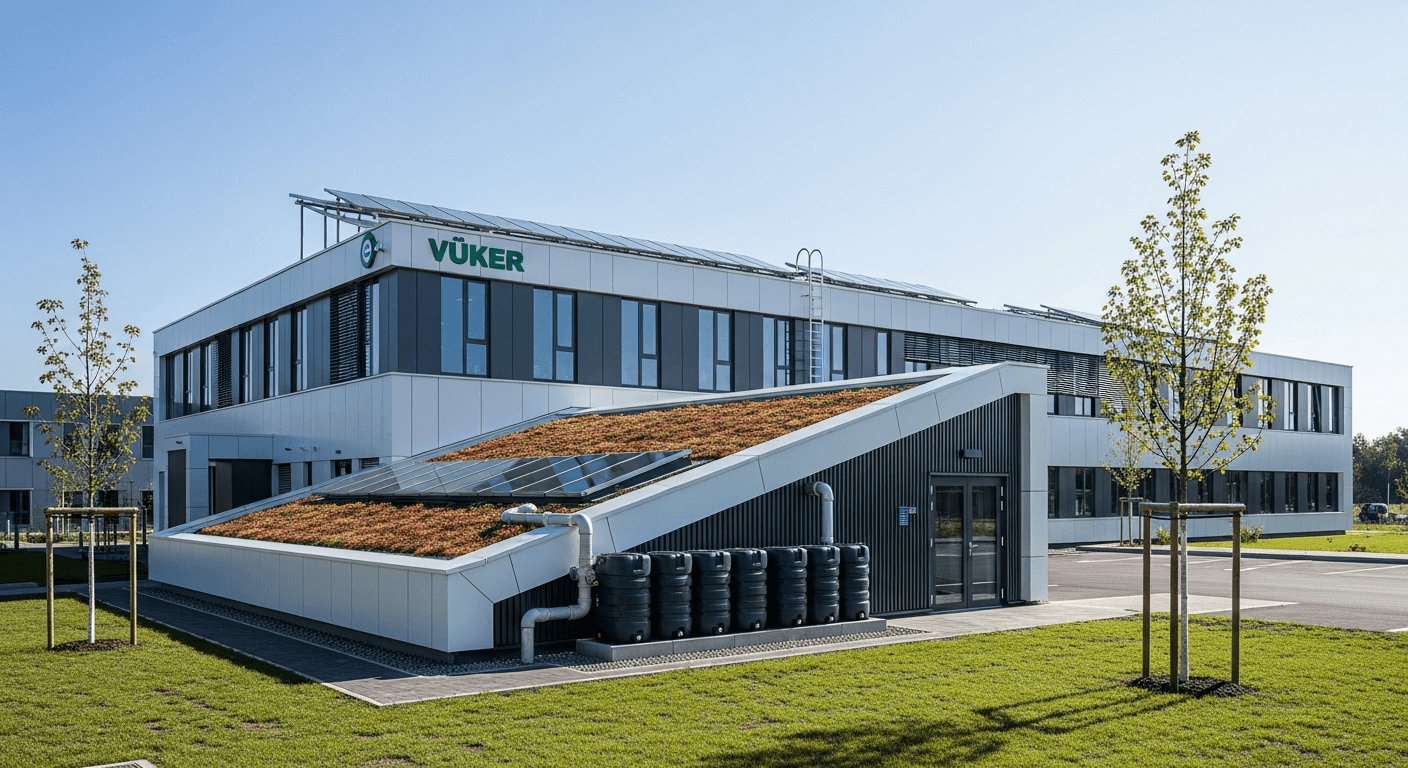
Rainwater harvesting captures roof runoff for non-potable uses like toilet flushing, irrigation, and cooling tower makeup. We design collection, storage, and treatment systems sized to your building and rainfall patterns. Properly designed systems can supply 30-50% of non-potable water demand.
Irrigation optimization includes weather-based controllers that adjust watering to actual conditions, drip systems for shrubs and trees, efficient sprinkler heads, and soil moisture sensors. Native and drought-tolerant plants reduce water needs further. Savings of 30-50% versus timer-based irrigation are common.
Greywater is wastewater from sinks, showers, and laundry (excluding toilets). After treatment, it can be reused for toilet flushing and irrigation. Greywater recycling is increasingly required for large buildings in water-stressed areas. We design systems that meet health regulations and building codes.
We use night-flow analysis of meter data to detect base leaks, acoustic sensors to locate hidden leaks, and thermal imaging for hot water leaks. Common problem areas include toilets (flapper valves), cooling systems, and underground irrigation pipes. Fixing leaks often provides the fastest payback for water investments.
A fixed threshold has to be set high enough not to fire on a busy Monday, which means it misses any leak small enough to hide inside normal daytime consumption. A model trained on each sub-meter's own history knows what that meter does on a Tuesday in April at typical occupancy, so a steady overnight flow of a few hundred litres per hour reads as an anomaly even though it never crosses an absolute limit. The same models fill in the gaps when a meter drops out, which matters more than it sounds for ESG disclosure, where an incomplete year of data is a reporting problem rather than a plumbing one. Forecasting is the other half: cooling tower makeup tracks weather closely enough that a short-term forecast is genuinely useful for planning deliveries and treatment chemistry.
Ready to Transform Your Commercial Water Management?
Let's discuss how we can help you achieve your water efficiency goals.