Municipal
Smart Water Networks for Cities

How We Can Help
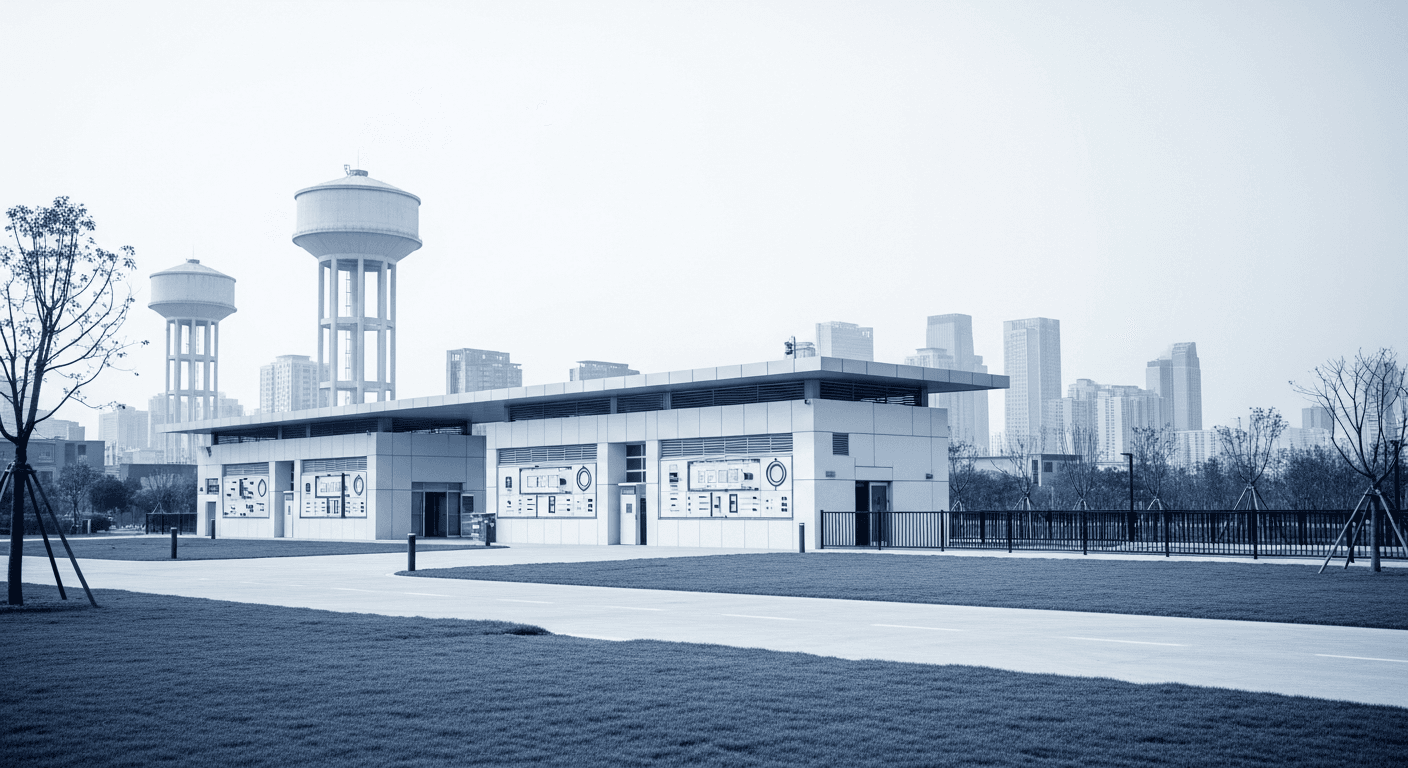
We partner with water utilities and municipal bodies to modernize their water infrastructure. Our AI-powered solutions help you find and fix leaks faster, predict demand accurately, and deliver better service to citizens. With our tools, you can prioritize infrastructure investments, reduce non-revenue water, and build a resilient water supply system for your growing city.
How the work runs
How a municipal engagement runs, from the decision that starts it to the one it hands back.
Quantify non-revenue water
Production, billed consumption and known unbilled use are assembled into a water balance, so the split between physical leakage and commercial loss is measured rather than argued about.
Zone the network
District metered area boundaries and meter positions are designed so each zone's inflow can be read on its own. A citywide loss figure cannot tell you which street to dig.
Baseline night flow
Minimum night flow is established for every district from the new metering, since that is the measurement in which leakage separates cleanly from legitimate overnight consumption.
Model pressure and demand
A calibrated network model, driven by demand forecast from consumption, weather and calendar data, shows which zones can be pressure managed without dropping below service pressure.
Rank mains by risk
Pipe age, material, break history, soil conditions and consequence of failure combine into a risk score, so a limited rehabilitation budget is spent on the highest-risk mains first.
Commit the capital plan
The utility adopts a repair, pressure management and replacement programme, and the district metering that found the losses stays in place to show whether they actually fell.
Key Challenges
High non-revenue water due to leaks
Aging infrastructure requiring prioritized upgrades
Peak demand management challenges
Citizen service and billing inefficiencies
Our Solutions
AI-powered leak detection and pipe burst prediction
Infrastructure condition assessment and prioritization
Demand forecasting and pressure management
Digital citizen portals and smart metering
Frequently Asked Questions
NRW is water produced but not billed to customers - including physical losses (leaks), commercial losses (theft, meter errors), and unbilled authorized use. In many Indian cities, NRW exceeds 40%. Reducing NRW improves revenue, reduces production costs, and extends the life of water sources.
Our AI analyzes flow patterns, pressure data, and acoustic signals to identify leaks before they surface. Machine learning algorithms distinguish leak signatures from normal usage patterns and prioritize repairs by leak size and location. This enables utilities to find hidden leaks 60-80% faster than traditional methods.
Smart meters record consumption hourly or more frequently and transmit data wirelessly. Benefits include automated billing, leak detection at customer premises, time-of-use data for demand management, and elimination of estimated bills. Many utilities see 5-10% revenue increase after smart meter deployment.
We use machine learning models trained on historical consumption, weather data, seasonal patterns, and special events to predict demand 24-72 hours ahead. Accurate forecasting optimizes pump scheduling, reduces energy costs, and ensures adequate supply during peak periods without over-pressurizing the network.
Pressure management maintains optimal pressures throughout the distribution network using PRVs (pressure reducing valves) and pump control. Excess pressure increases leak rates and pipe bursts. Reducing pressure from 60m to 40m head typically reduces leakage by 25-30% while maintaining adequate service.
We combine pipe age, material, break history, soil conditions, and criticality to calculate failure risk scores. Pipes are ranked by risk and consequence of failure. This data-driven approach ensures limited rehabilitation budgets target the highest-risk assets first.
Distribution system water quality monitoring tracks chlorine residual, turbidity, and other parameters from treatment plant to tap. Online sensors at key locations detect contamination events and disinfection issues. We help utilities design monitoring networks and respond quickly to water quality incidents.
Pumping typically accounts for 60-80% of utility energy costs. Optimization includes pump efficiency upgrades, variable speed drives, optimized pump schedules aligned with electricity tariffs, and pressure zone redesign. We typically identify 15-25% energy savings through operational optimization alone.
SCADA (Supervisory Control and Data Acquisition) provides real-time monitoring and control of pumps, valves, tanks, and treatment plants from a central location. Modern SCADA integrates with analytics platforms for automated optimization, predictive maintenance, and performance dashboards for decision-makers.
Drought management includes demand reduction through conservation campaigns and tariff adjustments, supply augmentation from alternative sources, and operational optimization to minimize losses. We help utilities develop drought response plans and implement real-time monitoring to track drought trigger levels.
Ready to Transform Your Municipal Water Management?
Let's discuss how we can help you achieve your water efficiency goals.