Mining
Water Management for Mining Operations

How We Can Help
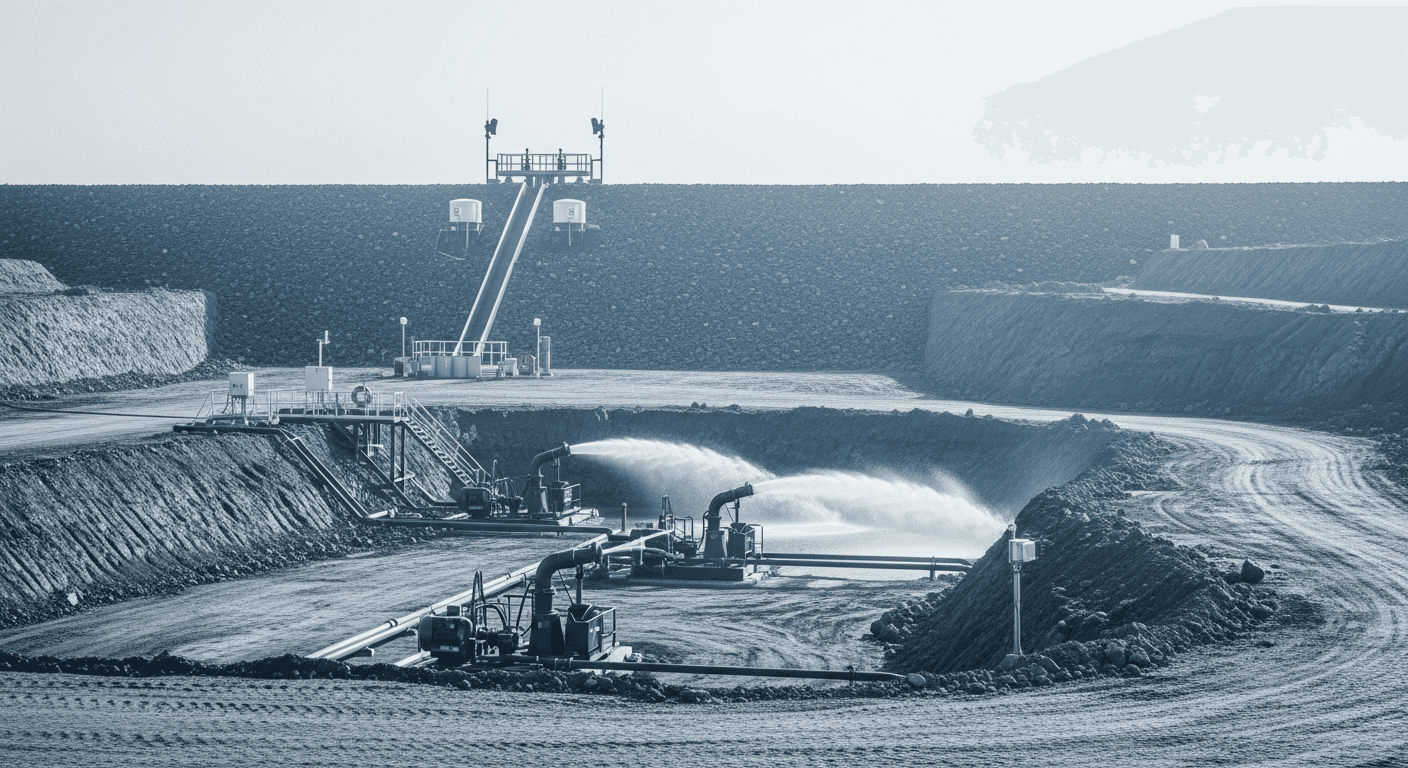
Mining operations face unique water challenges that require specialized expertise. Our team has extensive experience in mine water management, from designing efficient dewatering systems to ensuring environmental compliance. We use advanced groundwater modeling and real-time monitoring to help you manage water proactively, reduce operational risks, and maintain your social license to operate. Dewatering design itself stays with the groundwater model, because the next pit stage is a stress the aquifer has never been put under and nothing trained on past records can anticipate it. Machine learning does the work around that model: reconstructing the stretches that instrument failures tear out of piezometer records, separating a rainfall response from a pumping response in a noisy hydrograph, and flagging pore pressure readings that have started moving differently from the rest of their array.
How the work runs
How a mining engagement runs, from the decision that starts it to the one it hands back.
Frame the mine plan question
Dewatering rate for the next pit stage, tailings freeboard and a discharge consent are separate questions. Each needs a different model and a different monitoring array.
Recover the piezometer record
Existing piezometer and flow meter series are assembled and gap-filled, because power failures, blasting and instrument damage leave holes that straight-line interpolation quietly turns into false calibration targets.
Close the site water balance
Rainfall, groundwater inflow, process water, evaporation, seepage, discharge and product moisture are accounted for, so surplus and deficit periods are known before storage is sized.
Calibrate the groundwater model
MODFLOW is fitted to the reconstructed hydrographs and measured pit inflows, because the next pit stage is a stress the aquifer has never been put under.
Simulate the dewatering schedule
Well placement, pumping rates and staged pit geometry are run through the model, and predicted drawdown at neighbouring wells and streams is checked against the agreed impact limits.
Commit and keep watching
The mine adopts a dewatering and storage plan, while anomaly screening on tailings pore pressure arrays flags any instrument whose behaviour has separated from the rest.
Key Challenges
Pit dewatering and groundwater inflow management
Tailings storage facility water balance
Environmental compliance and discharge permits
Acid mine drainage prevention and treatment
Our Solutions
Groundwater modeling for dewatering optimization
Real-time tailings water level monitoring
Environmental monitoring and compliance dashboards
AMD prediction and treatment system design
Gap-filling and anomaly screening of piezometer records feeding the dewatering model
Frequently Asked Questions
Mine dewatering removes groundwater that would otherwise flood the pit or underground workings. It's essential for safe access and operation. We design dewatering systems using groundwater models to predict inflow rates, optimize well placement, and minimize impacts on surrounding water users and ecosystems.
AMD occurs when sulfide minerals in mine waste react with air and water to produce sulfuric acid, which dissolves heavy metals. Prevention strategies include covering waste with water or soil, adding lime to neutralize acid, and treating contaminated water. We assess AMD risk and design prevention and treatment systems.
We install piezometers and water level sensors around tailings dams to continuously monitor freeboard, saturation levels, and seepage. Real-time data feeds into dam safety systems with automated alerts. This monitoring is critical for dam stability and environmental protection.
A mine water balance tracks all water inputs (rainfall, groundwater inflow, process water) and outputs (evaporation, seepage, discharge, product moisture). We develop water balance models to predict surplus or deficit conditions, plan storage requirements, and optimize water recycling to reduce freshwater intake.
Groundwater models predict dewatering requirements for different pit designs and mining schedules. They identify when and where dewatering wells are needed, estimate pumping costs, and assess impacts on regional water resources. Models are updated as mining progresses and new data becomes available.
Mines must treat discharged water to meet permit limits for pH, suspended solids, metals, and other parameters. Requirements vary by jurisdiction and receiving water sensitivity. We help mines design treatment systems and monitoring programs that ensure consistent compliance.
Pit lakes form when dewatering stops and groundwater refills the pit. Water quality depends on wall rock geochemistry, groundwater inflow quality, and climate. We model pit lake evolution and design closure strategies including covers, treatment wetlands, or active treatment to achieve safe long-term water quality.
Dewatering can lower water levels in nearby wells and reduce streamflow. We assess these impacts through groundwater modeling and monitoring, work with regulators and communities to establish acceptable limits, and design mitigation measures like replacement water supplies when needed.
Mines reduce freshwater use by maximizing recycling of process water, using lower-quality water sources where possible, dry processing techniques, and dust suppression optimization. We conduct water audits to identify reduction opportunities and implement tracking systems to monitor progress.
Comprehensive monitoring includes groundwater levels, surface water flows and quality, pit inflows, discharge volumes and quality, and tailings facility conditions. Monitoring continues for years after closure until conditions stabilize. We design monitoring networks and data management systems for regulatory reporting.
The two answer different questions. MODFLOW predicts inflow to a pit geometry and a dewatering schedule that do not exist yet, which is exactly what a mine plan asks and exactly what a model trained on historical data cannot supply. Machine learning works on the measurement side. Piezometer and flow meter records on an operating site are full of holes left by power failures, blasting and instrument damage, and gap-filling models reconstruct those series so the water balance and the model calibration are not quietly built on straight-line interpolation. Anomaly detection on tailings facility pore pressure and level readings flags an instrument whose behaviour has separated from the rest of its array, which is either a sensor fault or something a geotechnical engineer needs to see that day. Seasonal inflow forecasting from rainfall and pumping history helps size pumping and storage before the wet season rather than during it.
Ready to Transform Your Mining Water Management?
Let's discuss how we can help you achieve your water efficiency goals.