Water Quality Modeling
Pollutant Fate & Water Quality Simulation

How We Can Help
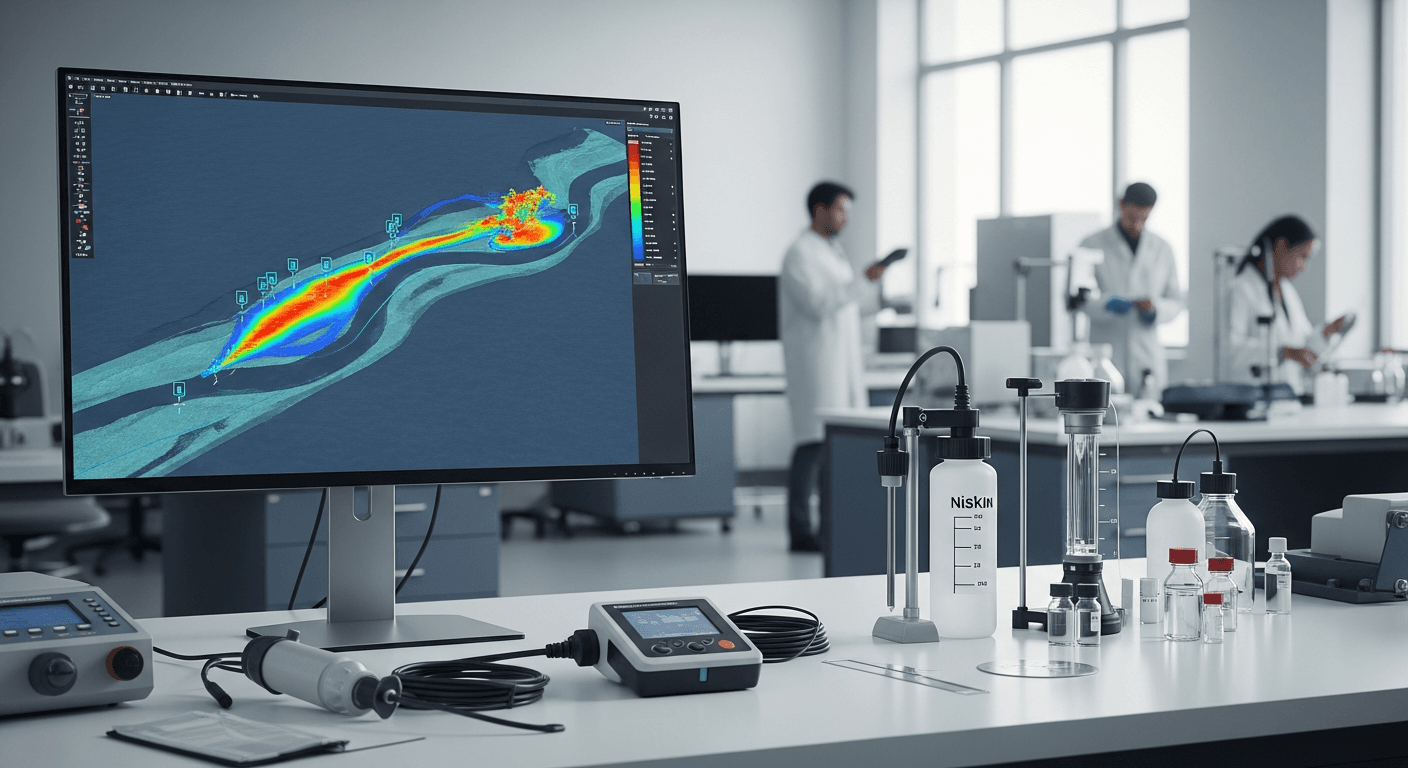
Understanding how pollutants move through water bodies is essential for environmental protection. We use QUAL2K, WASP, and other water quality models to assess discharge impacts, develop TMDLs, and design effective remediation strategies. Our models help regulators, industries, and environmental agencies make science-based decisions. Quality data is the hardest data in this field to trust, because probes foul, drift and fail, and a bad reading looks a great deal like a pollution event. Anomaly detection models trained on each instrument's own behaviour tell the two apart, and gap-filling reconstructs the record for the period the instrument was out. Where sampling is sparse, a learned relationship between a continuously measured proxy such as turbidity and a laboratory determined concentration turns occasional grab samples into an estimated load series. The process models stay where the regulatory questions are, because a discharge permit asks what would happen under a load that has never been discharged, and only a model of the underlying processes can answer that. On software, so nobody has to guess: Smart Bhujal is not a reseller of any water quality modelling package. Our Aquaveo reseller agreement in India is for groundwater modeling software, and we will not stretch it into something it is not. What we offer instead is the part the software cannot do for you: matching the model to the regulatory question, QUAL2K for a river or stream reach, CE-QUAL-W2 where a stratified reservoir makes vertical structure the whole story, WASP where the problem does not reduce to a single reach, then setting the chosen model up on your monitoring data and either handing it over or running the study ourselves.
How the model gets built
What a water quality modeling study involves, from framing the question to the decision the calibrated model supports.
Name the standard at stake
A discharge consent, a TMDL allocation and a remediation target are governed by different parameters and different compliance points. That determines what must be sampled.
Screen the monitoring record
Each instrument is checked against its own history so probe fouling and calibration drift are separated from genuine excursions, because a fouled probe and a real spill look alike in raw data.
Inventory the loads
Point discharges, diffuse runoff and upstream inflows are quantified as loads rather than concentrations, since a concentration without a flow says nothing about what the water body receives.
Calibrate the transport model
QUAL2K or WASP is fitted to observed concentration profiles, with reaction and decay rates constrained to values the sampled record can actually support.
Test the load scenarios
Proposed discharges and reduction options are simulated. A load never discharged before has no history, so the physics and chemistry carry the prediction.
Set the limit
The regulator or operator receives a permit limit, an allocation or a remediation design, with the assimilative capacity and its margin of safety stated.
Software & Tools We Use
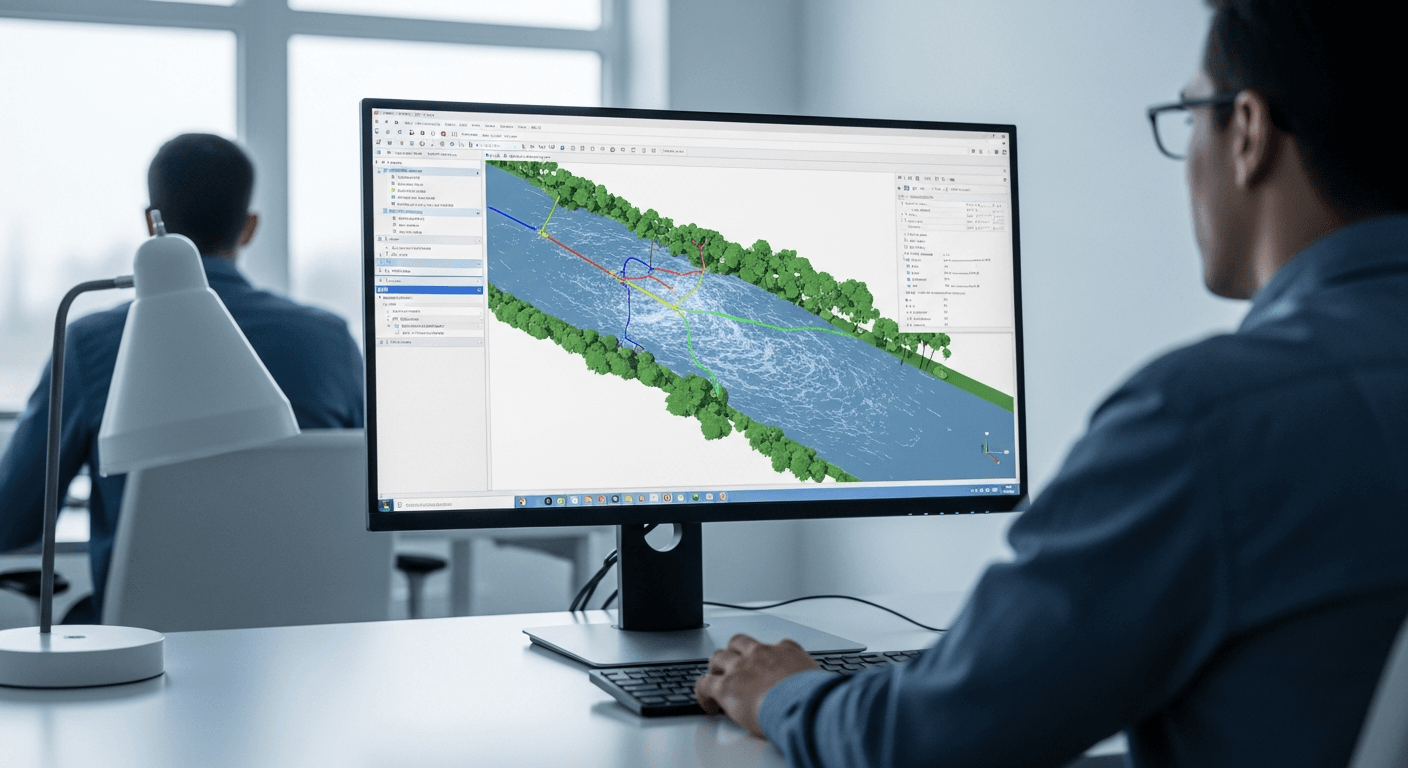
QUAL2K
River and stream water quality modeling
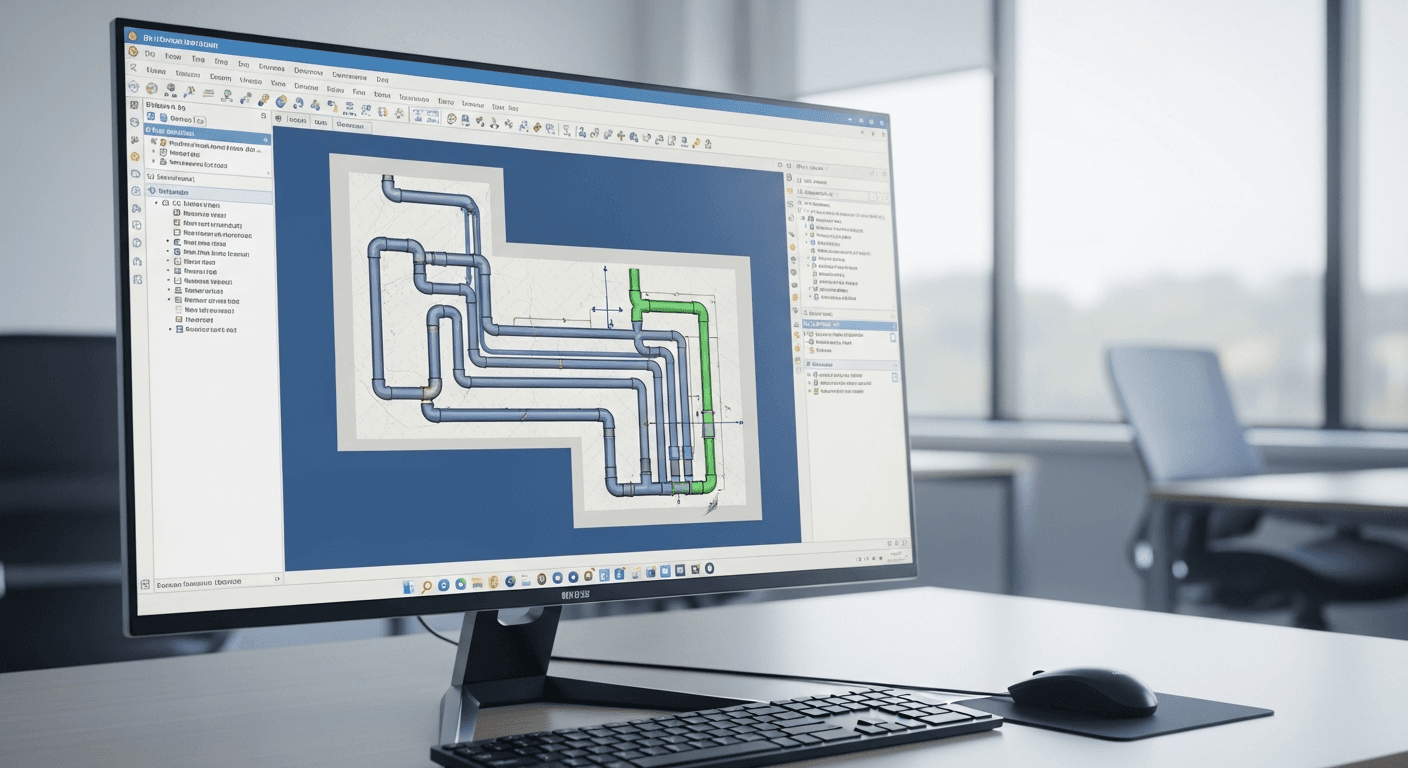
WASP
Water quality analysis simulation
CE-QUAL-W2
2D reservoir water quality model
MIKE ECO Lab
Ecological and water quality modeling
Applications
River water quality assessment
Wastewater discharge impact analysis
Reservoir stratification and quality
TMDL development
Eutrophication and algae modeling
Sensor drift detection and gap-filling in continuous quality monitoring
Water quality modelling software selection, model setup and calibration on your own monitoring data
Frequently Asked Questions
A TMDL (Total Maximum Daily Load) is a regulatory term for the maximum amount of a pollutant a water body can receive while still meeting water quality standards. TMDLs allocate pollution limits among different sources (point and non-point) and are required for impaired water bodies. Our water quality models support TMDL development by simulating pollutant fate and transport.
Eutrophication is excessive nutrient enrichment (nitrogen and phosphorus) that causes algal blooms, oxygen depletion, and ecosystem degradation. We model eutrophication using tools like CE-QUAL-W2 and WASP that simulate nutrient cycling, algae growth, and dissolved oxygen dynamics. These models help design nutrient reduction strategies for lakes and reservoirs.
We use water quality models to simulate how treated wastewater affects downstream water quality, including dissolved oxygen, nutrients, and other parameters. Models account for dilution, decay, and transformation processes. This analysis helps determine required treatment levels and mixing zone sizes to protect aquatic life and downstream users.
Water quality models can simulate dissolved oxygen, BOD/COD, nutrients (nitrogen, phosphorus), temperature, pH, algae, bacteria, sediment, and various pollutants. Advanced models simulate the full nutrient cycle, algae dynamics, and sediment-water interactions. We select parameters based on your specific water quality concerns and regulatory requirements.
Water quality modeling requires flow data, water quality measurements (grab samples and continuous monitoring), pollutant source characterization, channel geometry, and meteorological data. Calibration requires historical water quality data under various flow conditions. We design monitoring programs to collect data needed for reliable model development.
Dissolved oxygen (DO) is essential for aquatic life and is a key indicator of water quality. DO models simulate oxygen consumption (from organic matter decay) and reaeration (from atmosphere). We use these models to assess wastewater discharge impacts and ensure adequate oxygen levels to protect fish and other aquatic organisms.
Thermal pollution from power plant cooling water or industrial discharges affects aquatic ecosystems. We model temperature distribution using heat balance equations that account for solar radiation, atmospheric exchange, and upstream/discharge temperatures. Results help design outfalls and operational strategies to minimize ecological impacts.
Sediment transport models simulate erosion, deposition, and movement of particles in rivers, reservoirs, and coastal areas. We use these models to assess sedimentation in reservoirs, design dredging programs, evaluate bank erosion, and predict how sediments carry attached pollutants. Accurate sediment modeling is essential for long-term water body management.
Non-point source pollution (from agriculture, urban runoff, etc.) is diffuse and varies with rainfall. We use watershed models like SWAT to simulate pollutant loading from different land uses under various weather conditions. Results help identify critical source areas and design best management practices to reduce pollution loads cost-effectively.
A mixing zone is the area near a discharge where pollutant concentrations exceed water quality standards before dilution occurs. We model mixing zones using hydraulic and water quality models to ensure standards are met at the boundary. This analysis determines outfall design (diffuser type, depth) and permitted discharge concentrations.
It can predict what a monitored water body will do next. It cannot predict what that water body would do under a discharge that has never occurred. Those are different questions, and treating them as one is how water quality work goes wrong. For the first, models trained on nutrient, temperature and flow history give useful warning of the conditions that precede an algal bloom, and a learned relationship between a continuously measured proxy such as turbidity and laboratory concentrations converts sparse sampling into a continuous load estimate. The data quality work is worth as much: probes foul and drift, and anomaly detection trained on an instrument's own behaviour tells a failing sensor apart from a real excursion, which is the difference between a maintenance callout and a regulatory investigation. For the second question, the one a permit or a TMDL actually asks, QUAL2K and WASP represent the oxygen, nutrient and decay processes explicitly, so they can be run for a load nobody has ever discharged. No learned model can be.
We do not sell any of it. Our Aquaveo reseller agreement in India is for groundwater modeling software, so nothing below is a sales recommendation. On the choice itself: QUAL2K is the usual starting point for a river or stream reach with a conventional set of constituents. CE-QUAL-W2 is the one to reach for when the water body is a stratified reservoir and the vertical structure drives the answer. WASP covers water quality analysis where the system does not reduce to a single stream reach. MIKE ECO Lab is DHI's commercial ecological and water quality module; we model in it, we do not license it to you. The part that decides whether a study succeeds is not the software anyway. It is knowing which model the regulatory question needs, screening the monitoring record before it becomes a calibration target, and calibrating honestly against what was measured. We can set the model up on your data and hand it over, or run the study for you.
Need Water Quality Modeling?
Get in touch with our expert team to discuss your modeling requirements.