Water Distribution Networks
Pipe Network Analysis & Optimization

How We Can Help
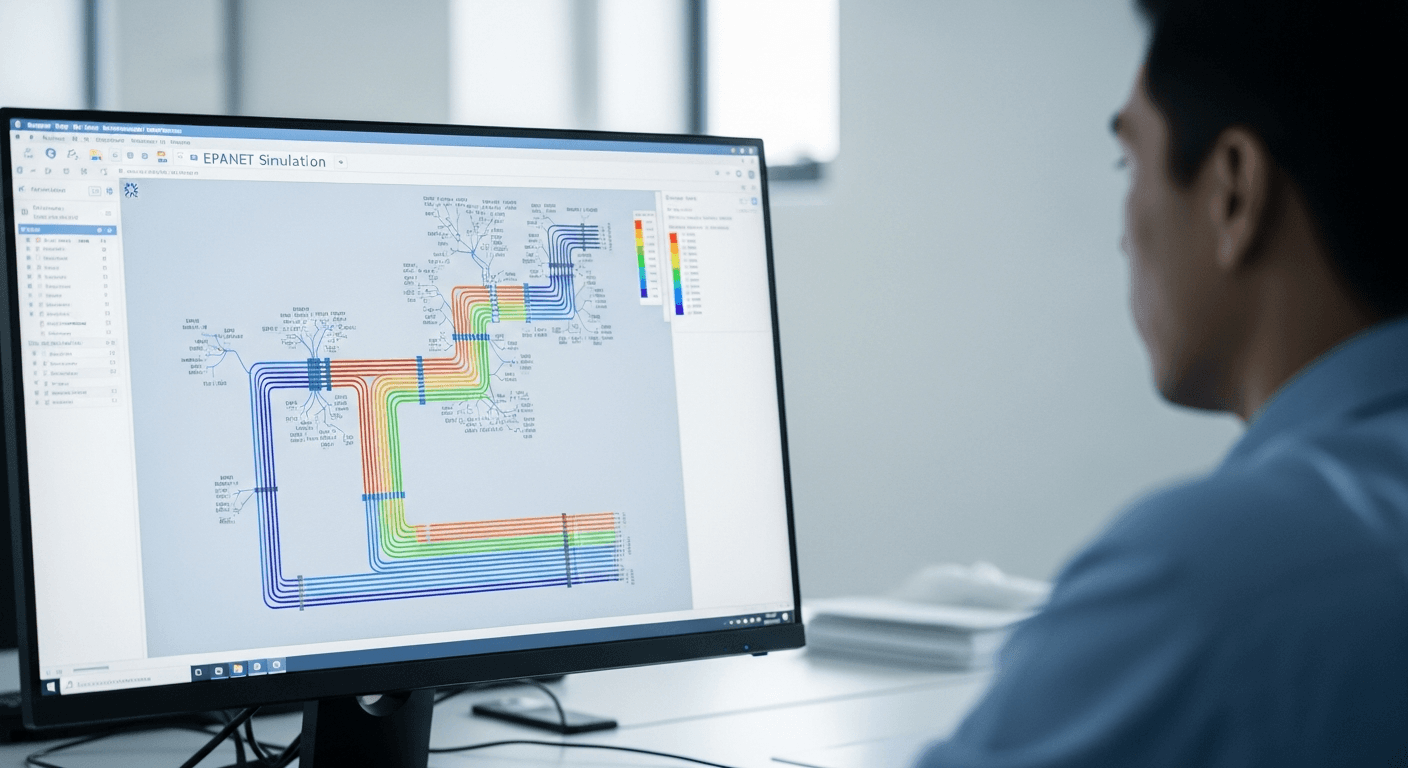
A well-designed water distribution network ensures reliable supply at optimal pressure while minimizing energy costs. Our network modeling experts use EPANET and WaterGEMS to analyze, design, and optimize pipe networks of all sizes. From new master plans to network extensions and rehabilitation prioritization, we help you build efficient water infrastructure. The hydraulics stay in EPANET, because pressure, fire flow and water age are conservation problems and because a proposed main appears in no dataset anywhere. Machine learning supplies the one thing the hydraulic model cannot produce for itself, which is the demand it is run against. Pump scheduling, tank management and pressure control are only as good as the demand assumed for them, and a model trained on district metered area consumption with weather and calendar effects beats a fixed diurnal curve by a wide margin. On the same telemetry, anomaly detection on minimum night flow is how a burst is found while it is still underground, and gap-filling keeps a patchy SCADA feed usable as a model input. A word on software, since that is often the real question. EPANET is free from the US EPA and solves the network hydraulics properly, so for network design, pressure zone work, fire flow and water age it is where we start and there is nothing to buy. WaterGEMS, WaterCAD and InfoWorks WS are commercial packages licensed by their own vendors, and Smart Bhujal resells none of them, so our view on which one suits you is advice rather than a sales pitch. What we do sell is the work around the software: choosing the right tool, building and calibrating the model, setting it up against your GIS and district metering data, and running the hydraulic modelling for you if you would rather not keep a modeller in house.
How the model gets built
What a water distribution networks study involves, from framing the question to the decision the calibrated model supports.
Fix the network question
A master plan, a fire flow check and a pressure management scheme test different things. Each one sets a different acceptance criterion for the same pipe network.
Build the network model
Pipe diameters, materials, ages, valve and pump settings, tank levels and elevations are assembled, because network behaviour follows the hydraulics of the assets as actually installed.
Forecast the demand
District demand is forecast a day to three days ahead from consumption, weather and calendar patterns, which is the input EPANET requires and cannot generate on its own.
Calibrate on field pressure
Modelled pressures and flows are matched against field logger readings and hydrant tests, so the model reflects the network that exists rather than the one on the drawings.
Run the scenarios
Peak day, fire flow, pump failure and pressure reduction cases are simulated in EPANET, since each changes the network and leaves no past data to learn from.
Commit the plan
The utility adopts a sizing, zoning or pressure management scheme, and minimum night flow monitoring continues so new bursts surface as departures from the established baseline.
Software & Tools We Use
EPANET
EPA water distribution network analysis
WaterGEMS
Comprehensive water network modeling
InfoWorks WS
Water supply network simulation
WaterCAD
Water distribution design and analysis
Applications
Network design and master planning
Pressure zone optimization
Water quality modeling in networks
Fire flow analysis
Pump scheduling and energy optimization
Demand forecasting and night-flow anomaly detection from district metering data
Water network modelling software selection, model build and setup in EPANET or a commercial package
Frequently Asked Questions
EPANET is a free software developed by the US EPA for modeling water distribution networks. It simulates water flow, pressure, and water quality throughout a pipe network over time. EPANET helps engineers design new systems, analyze existing networks, optimize pump operations, and ensure adequate fire flow and water quality.
Fire flow analysis determines whether a water distribution system can deliver adequate flow and pressure for firefighting at any location. It involves simulating fire hydrant flows while maintaining minimum pressures throughout the network. This analysis is required for new developments and helps identify weak points in existing systems that need reinforcement.
Pump scheduling optimizes when and how pumps operate to minimize energy consumption while meeting demand. By running pumps during off-peak electricity hours, utilizing storage tanks efficiently, and avoiding unnecessary pump cycling, utilities can reduce energy costs by 15-30%. Our models identify optimal pump schedules for your specific system.
Low pressure can result from undersized pipes, high elevation differences, excessive demand, closed valves, pipe scaling/corrosion, or pump issues. Our network models identify the root cause by simulating various scenarios and help design cost-effective solutions like pipe upgrades, pressure boosting, or demand management.
Water age is the time water spends in the distribution system from treatment to the tap. High water age leads to chlorine decay, disinfection byproduct formation, and water quality issues. Our models calculate water age throughout the network and help design operational strategies to reduce stagnation and maintain water quality.
Water hammer occurs when flow is suddenly stopped (e.g., valve closure, pump trip), causing pressure waves that can damage pipes. We use transient analysis software to simulate these pressure surges and design protection measures like surge tanks, air valves, and slow-closing valves to prevent pipe bursts and equipment damage.
DMAs divide a distribution network into smaller, monitored zones to detect leaks through flow balance analysis. Our models help design optimal DMA boundaries, select meter locations, and analyze hydraulic impacts. Well-designed DMAs can reduce non-revenue water by 20-40% through improved leak detection and pressure management.
We combine hydraulic modeling with pipe condition data (age, material, break history) to prioritize rehabilitation. Models identify critical pipes where failure would cause significant service disruption or low pressure. This risk-based approach helps utilities allocate limited rehabilitation budgets for maximum benefit.
Pressure management involves controlling pressures in distribution networks to reduce leakage, pipe bursts, and energy consumption while maintaining adequate service. We model pressure zones and PRV (pressure reducing valve) installations to optimize system pressures. Reducing excess pressure typically reduces leakage by 1-1.5% per 1% pressure reduction.
Network models simulate emergency scenarios like main breaks, contamination events, or power outages to develop response plans. We identify isolation valve operations, alternative supply routes, and critical customers. Simulation results help train operators and ensure rapid, effective response when emergencies occur.
EPANET answers every question that involves changing the network. Fire flow at a new development, the pressure effect of a proposed transmission main, water age once a service reservoir is taken offline: none of these exist in operational data, so they have to be solved hydraulically. Machine learning answers the questions about behaviour that has already been measured, and demand is the main one. A model trained on district metered area consumption together with weather and calendar effects forecasts the next 24 to 72 hours well enough to plan pump schedules against, which is where most of the recoverable energy cost in a network sits. Anomaly detection on minimum night flow finds new bursts through their departure from a district's own established pattern rather than through a threshold that has to be set loose enough to survive a hot weekend. Gap-filling makes an intermittent telemetry feed usable as a model input. The two then feed each other, because the forecast becomes the demand pattern the hydraulic model is run with.
We sell none of it, which is worth saying before the recommendation rather than after it. Start with EPANET unless you have a reason not to: it is free from the US EPA, it solves the network hydraulics correctly, and for network design, pressure zone optimisation, fire flow and water age it does what most utilities and consultants need. The commercial packages, WaterGEMS, WaterCAD and InfoWorks WS among them, add GIS and CAD integration, scenario management and reporting that earn their cost when a team maintains a live model of a large network, and earn much less on a one-off study. Smart Bhujal is not a reseller of any of those. We are an authorised reseller of Aquaveo's groundwater modeling software in India, and that is a groundwater product line, so there is no version of this answer in which we sell you a network package. What we do offer is tool selection, model build and calibration, setup against your own GIS and district metering data, and the hydraulic modelling itself delivered as a service.
Need Water Distribution Networks?
Get in touch with our expert team to discuss your modeling requirements.