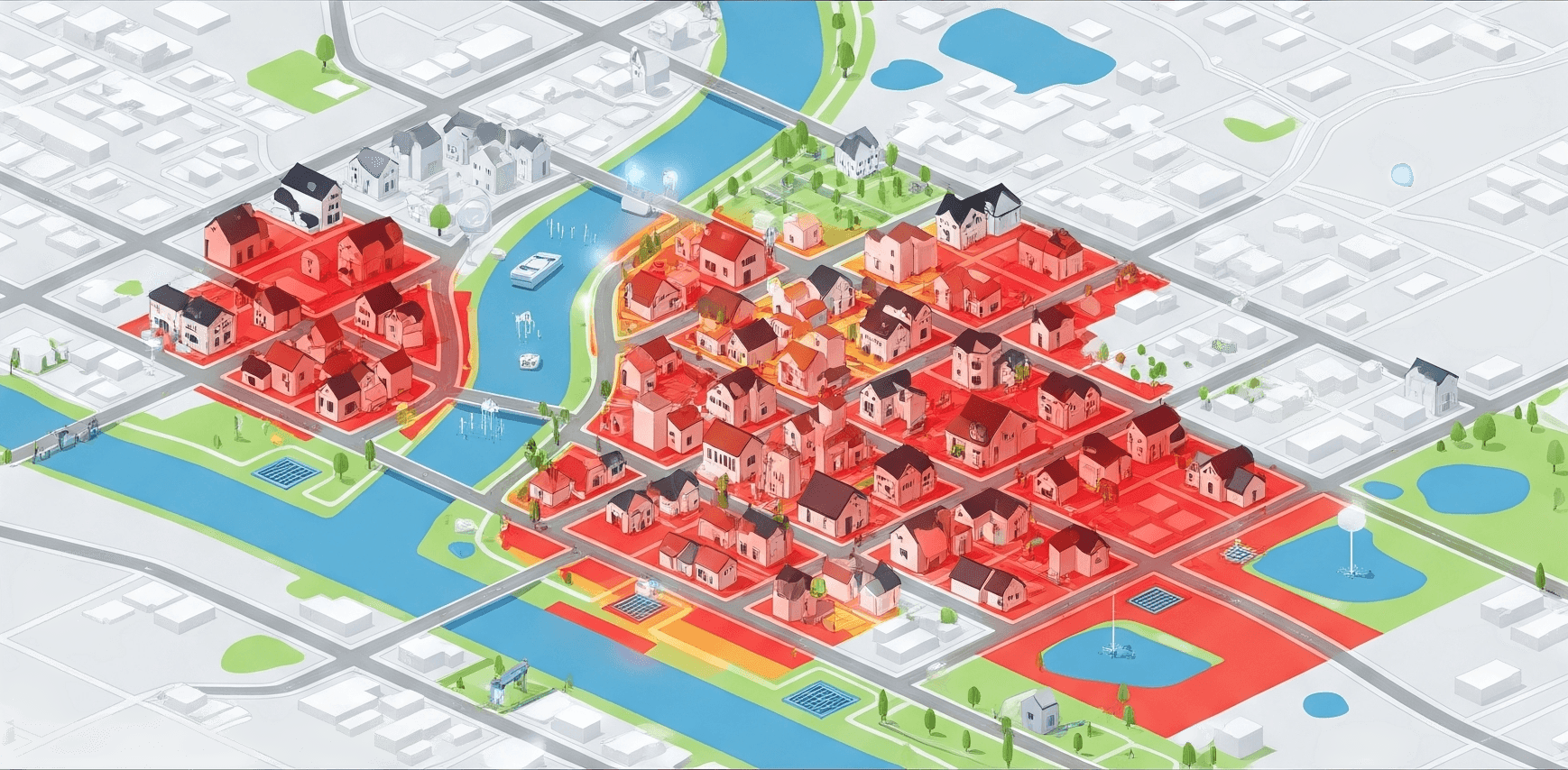
Basin planning models are unusual among water models because the interesting content is not physics. Allocation priorities, water rights and operating rules are legal and political decisions, and the model exists to make their consequences visible. That changes what a good tool looks like.
WEAP and MIKE HYDRO Basin, the successor to MIKE BASIN, are the two names that come up most, alongside RIBASIM from Deltares and the catchment model SWAT for a related but different job.
WEAP, and why it dominates participatory planning
WEAP, from the Stockholm Environment Institute, models water demand, supply, allocation priorities and scenarios at basin scale. Its defining characteristic is accessibility. The structure is transparent enough that a stakeholder who is not a modeller can follow what it is doing and argue with it.
That matters more than it sounds. In a basin allocation process, a model nobody outside the technical team understands is a model nobody trusts, and the point of the exercise is usually agreement rather than optimisation. WEAP is widely used in development and transboundary contexts for exactly this reason.
Its scenario structure is also well suited to the question these studies actually ask, which is not what will happen but what happens if we choose differently.
MIKE HYDRO Basin, and when the hydraulics matter
MIKE HYDRO Basin is a commercial basin scale allocation and planning tool from DHI. Its advantage is integration: it sits within a family of models covering rivers, groundwater, urban systems and water quality, so a basin study that needs to connect to detailed hydraulic or quality modelling can do so without leaving the ecosystem.
Choose it when the allocation question is genuinely coupled to detailed physical modelling, when the organisation already runs the MIKE stack, or when reservoir operation needs more hydraulic realism than a planning model normally carries.
Where RIBASIM and SWAT sit
RIBASIM from Deltares is another established basin allocation package, strong on infrastructure and operating rules, and common in programmes where Deltares has a long involvement.
SWAT is often mentioned in the same conversation and answers a different question. It is a catchment model for land use, agricultural practice, sediment and nutrient loading. If you are asking what land management does to water and quality, SWAT. If you are asking who gets the water, WEAP or MIKE HYDRO Basin. It is common to need both, with a catchment model producing the inflows that an allocation model then distributes.
The rules are never learned from data
Whichever package you choose, allocation rules go into the model explicitly. Water rights, priorities and operating agreements are decisions people made, and no amount of historical data implies what they should be.
This is the one place in water modelling where we would say flatly that machine learning has no role in the core of the model. It has a real role in the inputs, in downscaling climate projections and forecasting seasonal inflows, and none at all in deciding who is first in line during a shortage. We have written about that boundary at more length in where AI stops.
A decision rule
If the study is participatory, if stakeholders have to understand and accept the model, or if the budget is constrained, WEAP is usually the right answer. If the basin question is tightly coupled to detailed hydraulic or water quality modelling, or the organisation already runs that ecosystem, MIKE HYDRO Basin. If you are asking about land use and loading rather than allocation, you want a catchment model instead.
Licensing terms differ between these and change over time, so confirm the current position directly with the developer rather than relying on what was true a few years ago.
We build integrated water resources models and resell none of these packages. Basin work is also the case where the model most often needs to end up as something an authority operates rather than a report it receives, which makes it a digital twin question as much as a modelling one. Our consulting and modelling services cover both sides of that.