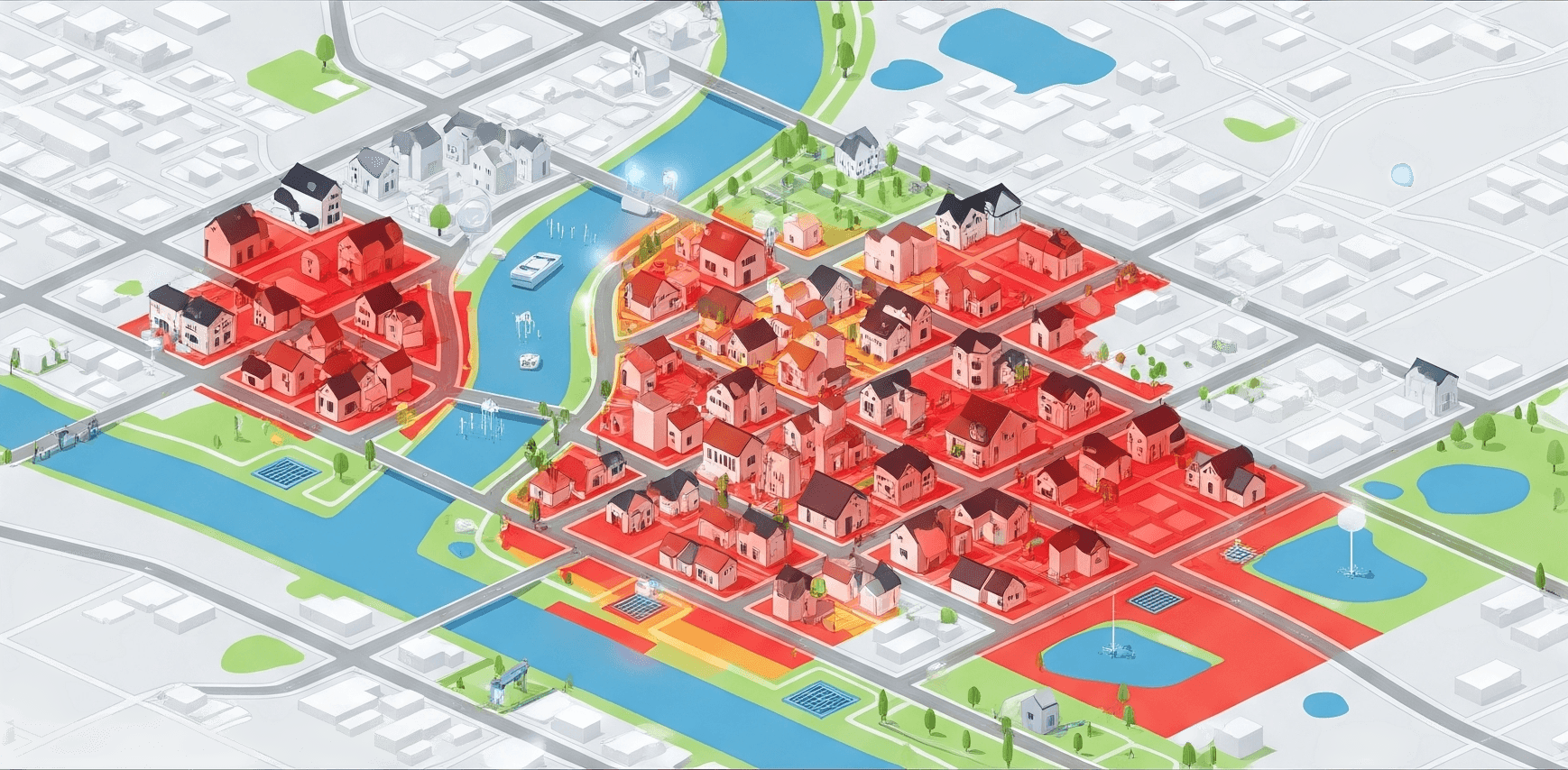
SWMM, HEC-RAS and HEC-HMS are all free, all widely accepted by US regulators, and often mentioned in the same breath. They do different jobs. SWMM, from the US EPA, models urban drainage networks. HEC-RAS and HEC-HMS, from the US Army Corps of Engineers, model river hydraulics and catchment hydrology respectively.
What is the difference between SWMM and HEC-RAS?
SWMM is built for pipes and urban catchments; HEC-RAS is built for rivers and floodplains. SWMM routes runoff through storm and combined sewers, culverts, open channels and ponds, and reports surcharge and flooding at manholes. HEC-RAS computes water levels in rivers and across floodplains, in 1D and 2D, with bridges, culverts, weirs, levees and dam breach.
- Use SWMM when the question is about a drainage network: pipe capacity, manhole flooding, overflows, detention storage and green infrastructure.
- Use HEC-RAS when the question is about a river or an overland flood: flood extents, water levels at a structure, floodplain mapping, levee or dam failure.
Recent HEC-RAS releases have begun to add storm sewer pipe networks inside 2D areas. Check the current release notes before relying on that for a drainage design; SWMM remains the established tool for one.
What is the difference between SWMM and HEC-HMS?
HEC-HMS is hydrology only: it turns rainfall into runoff hydrographs and routes them through a catchment, but it does not compute water levels in a pipe or channel network. SWMM includes its own rainfall runoff hydrology and adds the hydraulics of the drainage system. For a rural or natural catchment feeding a river, HEC-HMS is the usual hydrology. For an urban catchment drained by pipes, SWMM does both halves.
When do you use two of them together?
Often. A river flood study commonly runs HEC-HMS for the inflow hydrographs and HEC-RAS for the river hydraulics. An urban study that discharges to a river may run SWMM for the network and HEC-RAS for the receiving watercourse, with the river level set as SWMM's outfall boundary. The joins between models are where errors hide, so agree the boundary conditions before either model is built.
A quick way to decide
Draw the water's path. If it runs through pipes and inlets, SWMM. If it runs down a river or spreads across a floodplain, HEC-RAS. If you only need to know how much water arrives, and when, HEC-HMS. For the commercial alternatives see stormwater modeling software compared and flood modelling software, free vs paid.
Smart Bhujal runs stormwater and drainage studies in SWMM and flood studies in HEC-RAS and HEC-HMS, and couples them where a drainage network meets a river.