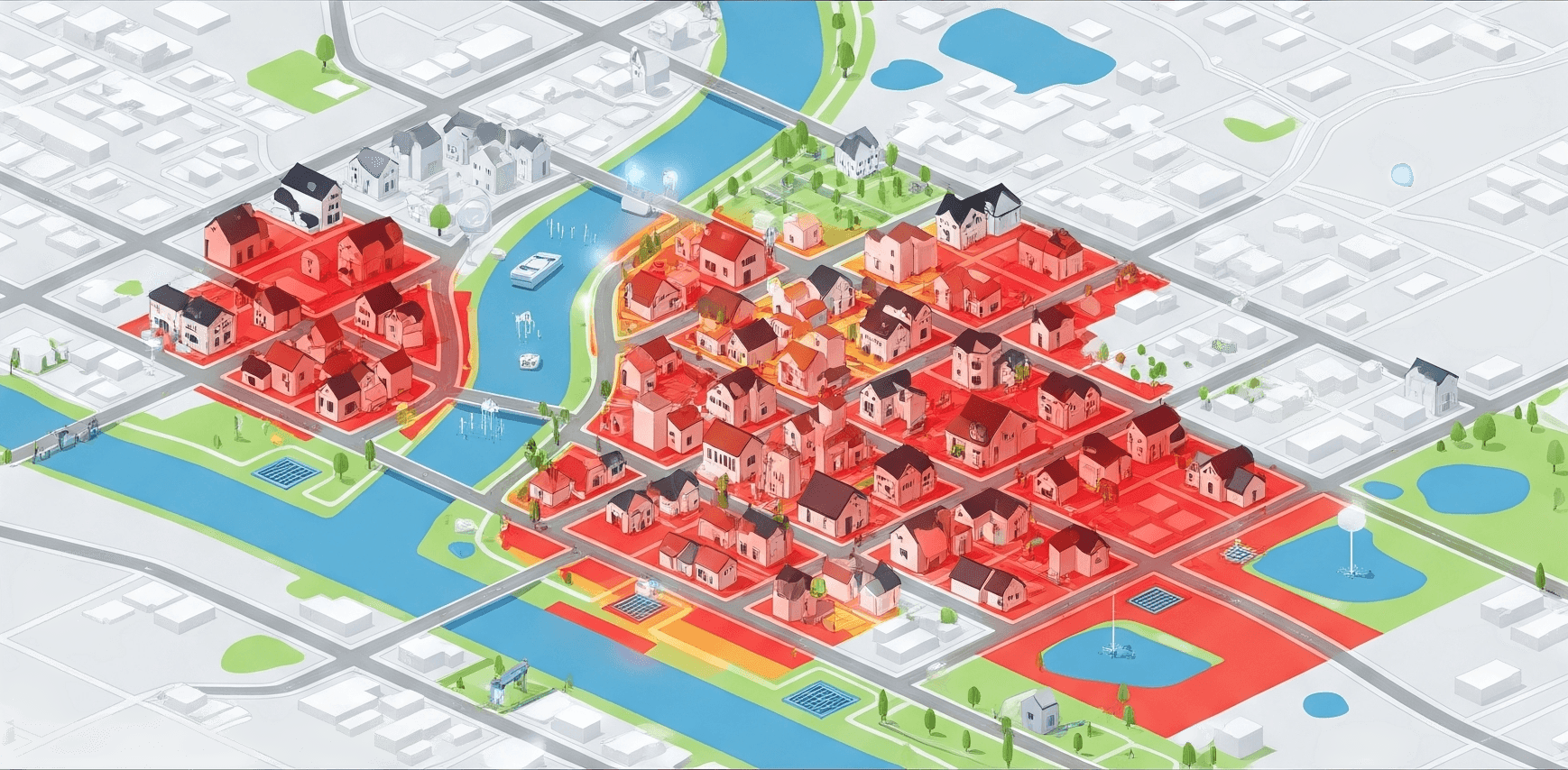
EPANET and SWMM are both free, both developed by the US Environmental Protection Agency, and both describe a system as a network of nodes and links. That is where the resemblance ends. EPANET models pressurised drinking water distribution. SWMM models stormwater and wastewater systems that mostly flow by gravity, along with the rainfall that feeds them.
What is the difference between EPANET and SWMM?
The difference is the water they move and the physics that moves it. EPANET solves pressurised flow in full pipes driven by pumps, tanks and reservoirs, and asks whether every customer gets enough pressure. SWMM solves free surface flow in sewers, channels and storage, driven by rainfall runoff, and asks whether the system floods or overflows.
- EPANET: pressures, flows, tank levels and pump operation over an extended period, plus water quality such as chlorine decay and water age.
- SWMM: runoff from subcatchments, routing through pipes and channels, surcharge and flooding at manholes, storage, pumps, combined sewer overflows, green infrastructure and pollutant loads.
When should you use EPANET?
Use EPANET for a drinking water network: sizing mains, setting pressure zones, checking fire flow, scheduling pumps, sizing tanks and tracing water age or chlorine residual. Version 2.2 added pressure driven analysis, which matters when you need to know how much water reaches customers during low pressure rather than assuming demand is always met. EPANET also sits underneath much commercial water network software and research tooling, including the Python package WNTR for resilience analysis.
When should you use SWMM?
Use SWMM for anything that drains: storm sewers, combined sewers, open channels, detention ponds and sustainable drainage. It converts rainfall to runoff for each subcatchment and routes it through the network, so it answers design storm and long term continuous simulation questions that EPANET cannot represent at all. SWMM can model a pumped force main within a drainage system, but it is not a tool for a supply network with customer demands.
Can EPANET model stormwater, or SWMM model water supply?
No, not usefully. EPANET has no rainfall, no runoff and no free surface flow, so a gravity sewer is outside what it can represent. SWMM can carry pressurised flow in a force main, but it has no concept of customer demand patterns, pressure targets at service connections or water age in a looped supply network. A utility running both systems runs both programs.
A quick way to decide
Ask what fails if the design is wrong. If the failure is low pressure at a tap, it is an EPANET problem. If the failure is a flooded street or an overflow to a river, it is a SWMM problem. For the commercial tools built on each engine, see water network design software compared and stormwater modeling software compared.
Smart Bhujal runs studies in both: water distribution modelling in EPANET and stormwater and drainage modelling in SWMM. Where the model has to be used every day rather than for one report, it becomes a water decision support system.